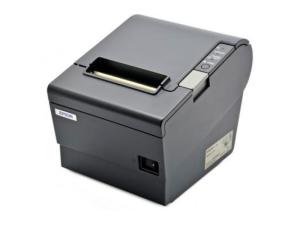
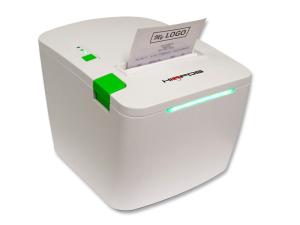
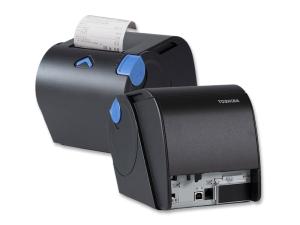
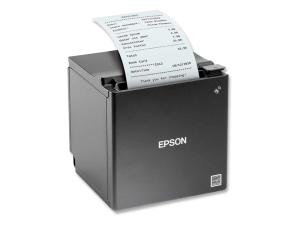
Especificaciones técnicas

Expansion and connectivity
Printer connectivitySerial, USB, Ethernet
Dimensions and weight
Dimensions12.7x17.8x24.2 cm.
Weight1.40 Kg.
Other information
Technology
CopiesPrinter speed 51 mm/s
Paper managementPaperwidth 31.16mm, Cut auto

Descripción del producto

Standard Features:
Automatic material loading – without user contact with the material during loading or extraction
Automatic print speed setting - up to 102 mm/second, depending on installed cartridge.
Direct thermal printing of barcodes, text and graphics
Double-wall structure, with impact-resistant plastic.
ZplTM or Zpl iiTM programming languages
32-bit Risc processor.
Memory 8mb sdRam as standard
(4mb available to the user)
8mb flash memory as standard (4mb available to the user)
Zebra e3TM printhead energy control
Communications interface:
Dual: serial and USB
Odometer for traceability length
print
Illuminated material status indicator
Tool-free replacement of the
print head and the print support base
UnicodeTM approved for applications
multi-language
Instant material calibration
16 resident expandable bitmap fonts
A scalable resident fountain
Head-up sensor
Standard dispense mode function
Xml printing enabled – allows
Xml communications from information systems.
Maximum Print Length:
558mm
Minimum Print Length:
73mm
Print Widths:
19.05mm/25. 4mm/30.16mm
Resolution:
300dpi/12 dots per mm
Maximum Print Speed:
51mm/sec. (Healthcare)
102mm/sec. (Z-band fun & Z-band splash)
Quality checks/laboratory tests: Physical inspection: Chassis inspection, cleaning and damage verification. Connectivity: Checking ports and connections (USB, Ethernet, etc.). Print test: Quality and speed test, alignment and readability check. Paper management: Review of the feeding system and jam detection. Load test: Reliability test in continuous use.
Internal inspection: Verification and cleaning of internal components.

Similar alternatives

Our refurbishment process

Each device goes through 15 technical checks in our factory in A Coruña, under ISO 9001 and ISO 14001 standards, before being shipped to the customer.

1 Receipt

Receipt of the device and initial verification of the batch and documentation.

2 Traceability

Internal registration, labelling and serial number to ensure traceability of each unit.

3 Visual inspection

Inspection of the chassis, ports, hinges and external components to classify the cosmetic grade.

4 Professional cleaning

Internal and external cleaning adapted to the type of device, using specific products.

5 Board and connections

Check of the motherboard, internal connections and overall system operation.

6 CPU and memory

Processor and RAM tests under load, when applicable to the product.

7 Storage

Check of the SSD, M.2 or hard drive and replacement with a new unit if it does not pass the tests.

8 Graphics

Graphics card and video output tests according to the device configuration.

9 Ports and connectivity

Inspection of ports, slots, wired network and available wireless connectivity.

10 BIOS and firmware

BIOS or firmware check and update to the manufacturer’s latest stable version.

11 Operating system

Installation of an operating system with an official licence when applicable to the model.

12 Security

Application of critical security updates before being put up for sale.

13 Performance

Performance and stability tests according to the type of device and its intended use.

14 Final quality control

Final validation of the device and stability check before approving it for sale.

15 Packaging and shipping

Secure packaging and order preparation for mainland shipping in 24–48 h.